





AI Won’t Fix Cybersecurity Burnout

A new report finds AI is reshaping cybersecurity roles but failing to reduce workload and burnout among security leaders.

Written By
thumbnail
Ken Underhill
Ken Underhill
Mar 5, 2026
eSecurity Planet content and product recommendations are editorially independent. We may make money when you click on links to our partners. Learn More

Artificial intelligence was supposed to relieve security teams drowning in alerts, threats, and operational complexity. 

New research from Seemplicity suggests the opposite may be happening. 

The study found that cybersecurity leaders remain committed to the field but are increasingly working longer hours, managing new governance responsibilities, and developing non-technical skills to operate in AI-driven environments.

“Cybersecurity isn’t suffering from a lack of heart; it’s suffering from a broken blueprint. When 94% of a burned-out workforce says they’d still pick this job tomorrow, it shows the problem isn’t the people. It’s the pressure we’re putting them under,” said Ravid Circus, Co-Founder and CPO at Seemplicity in an email to eSecurityPlanet.

He added, “AI is the operational reset we’ve been waiting for. It’s not about replacing the person in the chair; it’s about protecting them, giving them the breathing room to move from reactive firefighting to proactive strategy.”

Cybersecurity Teams Face Rising Burnout

The report, based on a survey of 300 U.S. cybersecurity and IT professionals, highlights a workforce operating under sustained strain while simultaneously adapting to new expectations tied to AI adoption. 

Leaders are not only responsible for defending complex digital environments but also for overseeing automated systems that increasingly influence security operations.

Cybersecurity leaders report averaging 10.8 hours of overtime per week, creating what the report calls a “hidden sixth day” of labor. 

Nearly half of respondents said they regularly work more than 11 extra hours each week, while roughly 20% reported working more than 16 additional hours.

This workload is producing measurable stress across the profession. 

About 44% of respondents say their work feels emotionally exhausting more often than rewarding, and 43% say taking time off creates additional stress due to the backlog waiting for them upon return. 

Despite these pressures, however, 94% of respondents said they would still choose cybersecurity as a career, suggesting the burnout problem stems from systemic pressures rather than a lack of commitment.

Advertisement

The New Skills Cybersecurity Leaders Need

Beyond workload challenges, the report highlights a shift in the skills cybersecurity professionals need to succeed. 

As AI automates many routine technical processes, the role of security teams is expanding beyond just engineering tasks into organizational strategy and cross-functional collaboration.

According to the research, 89% of cybersecurity technical leaders now work closely with other business units, reflecting security’s growing influence on enterprise decision-making.

At the same time, 82% of respondents say interpersonal skills — such as communication, empathy, and business alignment — are more important today than they were five years ago.

AI adoption appears to be accelerating this shift. The report found that 85% of leaders feel pressure to strengthen communication and leadership skills because of AI integration. 

As automated systems handle more technical tasks, human professionals are increasingly responsible for interpreting AI outputs, evaluating risks, and translating technical findings into business decisions.

In other words, cybersecurity leadership is becoming less about hands-on technical defense and more about strategic judgment.

Advertisement

The Future Cybersecurity Leader: AI Risk Governor

One of the other notable findings from the report is how cybersecurity leadership itself is evolving. 

Rather than focusing solely on technical engineering, the next generation of cybersecurity professionals will likely act as governance leaders overseeing automated systems.

Seventy-three percent of respondents identified AI oversight and governance as the most important future capability for cybersecurity professionals, surpassing traditional engineering skills.

This shift reflects the growing need to audit, monitor, and manage AI-driven security systems.

The report describes this emerging role as a “risk governor.” 

In practice, that means cybersecurity leaders must balance three key responsibilities:

  • Governance: Ensuring AI systems operate securely and ethically.
  • Engineering: Maintaining the underlying technical infrastructure.
  • Strategy: Aligning cybersecurity decisions with broader business goals.

This hybrid role reflects how AI is transforming cybersecurity from a purely technical discipline into a leadership function closely tied to organizational risk management.

Advertisement

AI Budgets Are Rising — Training Isn’t

While many organizations are investing heavily in AI technologies, the report suggests that workforce development is not keeping pace.

Approximately 64% of cybersecurity leaders say they have sufficient budgets to implement AI features, indicating that financial investment is not the primary barrier to adoption.

However, 52% of respondents report that training for effective human–AI collaboration is limited or insufficient.

This gap creates operational risks. Deploying advanced AI tools without adequate training can leave leaders responsible for overseeing complex systems they may not fully understand. 

In practice, this often shifts additional decision-making burdens onto already overextended professionals.

As the report notes, organizations may be “conflating financial investment in AI with actual operational readiness.” 

Advertisement

The AI Trust Problem in Cybersecurity

Even as AI tools become more powerful, cybersecurity leaders remain cautious about relying on automated systems without proper oversight.

The study found that 62% of respondents consider consistent technical accuracy the primary requirement for trusting AI systems, but other factors are nearly as important. 

More than half of respondents said human override capabilities and clear accountability structures are essential, while 53% emphasized the need for transparent explanations of AI decisions.

These findings highlight a broader concern around so-called “black box” AI systems. 

Security leaders are willing to use AI as an operational force multiplier, but only if they retain visibility and control over how decisions are made.

The report also identified a trust gap between internal and external AI systems. 

About 87% of leaders trust their internal teams to use AI responsibly, compared with 77% who express the same level of trust in third-party vendors.

This difference suggests that transparency and governance remain critical factors when evaluating third-party AI solutions.

Advertisement

AI Is Redefining the Cybersecurity Workforce

The findings underscore a broader trend shaping the cybersecurity industry: AI is not replacing security professionals, but it is redefining their role.

While automation can help address the growing scale of cyber threats, it also introduces new responsibilities around oversight, governance, and strategic decision-making. 

At the same time, the persistent workload pressures facing cybersecurity teams highlight the need for organizations to rethink how security operations are structured.

Ultimately, the future of cybersecurity will depend on integrating AI capabilities with a workforce that is properly trained, supported, and empowered to govern these technologies. 

Without that balance, AI risks becoming just another source of complexity rather than the operational relief many organizations hoped it would provide.

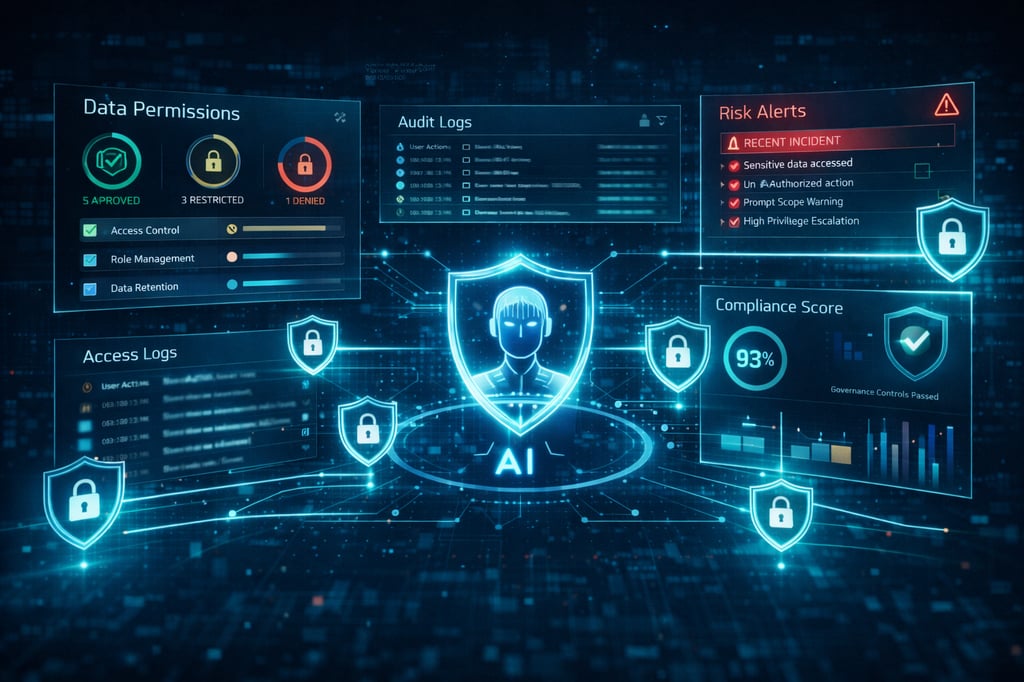
As AI expands in security operations, strong AI governance is becoming a critical priority for organizations.

thumbnail
Ken Underhill

Ken Underhill is an award-winning cybersecurity professional, bestselling author, and seasoned IT professional. He holds a graduate degree in cybersecurity and information assurance from Western Governors University and brings years of hands-on experience to the field.

Recommended for you...

AI Agent Safety Checklist
Girish Redekar
Mar 12, 2026
Active Directory Flaw Enables SYSTEM Privilege Escalation
Ken Underhill
Mar 12, 2026
400K WordPress Sites Exposed by Elementor Ally Plugin SQL Flaw
Ken Underhill
Mar 12, 2026
Iran-Linked Hacktivists Claim Wiper Attack on Stryker Systems
Ken Underhill
Mar 12, 2026
eSecurity Planet Logo

eSecurity Planet is a leading resource for IT professionals at large enterprises who are actively researching cybersecurity vendors and latest trends. eSecurity Planet focuses on providing instruction for how to approach common security challenges, as well as informational deep-dives about advanced cybersecurity topics.

Property of TechnologyAdvice. © 2026 TechnologyAdvice. All Rights Reserved

Advertiser Disclosure: Some of the products that appear on this site are from companies from which TechnologyAdvice receives compensation. This compensation may impact how and where products appear on this site including, for example, the order in which they appear. TechnologyAdvice does not include all companies or all types of products available in the marketplace.